Series Navigation
- Previous: Using Regular User Scripts in X Browser
- Current: Using Tampermonkey Scripts in X Browser
- Next: Tampermonkey Script API Reference
- Tampermonkey Script API Examples
TL;DR (Quick Start)
- Simplest Installation Method: Open the script’s URL in the address bar, X Browser will recognize and prompt for installation.
- Common Script Source: Greasy Fork.
- Management Location After Installation: Settings -> User Scripts.
Quick Navigation
- Quickly Install Your First Tampermonkey Script
- Installing Tampermonkey Scripts from Greasy Fork
- Other Channels for Getting Scripts
X Browser has built-in support for Tampermonkey scripts, eliminating the need to install extensions like Tampermonkey or Greasemonkey as in other browsers, making direct installation more convenient.
Quickly Install Your First Tampermonkey Script
If you know the script’s URL address, the simplest and most direct way is to paste the URL into the browser address bar. X Browser can recognize the Tampermonkey script and prompt you to install it.
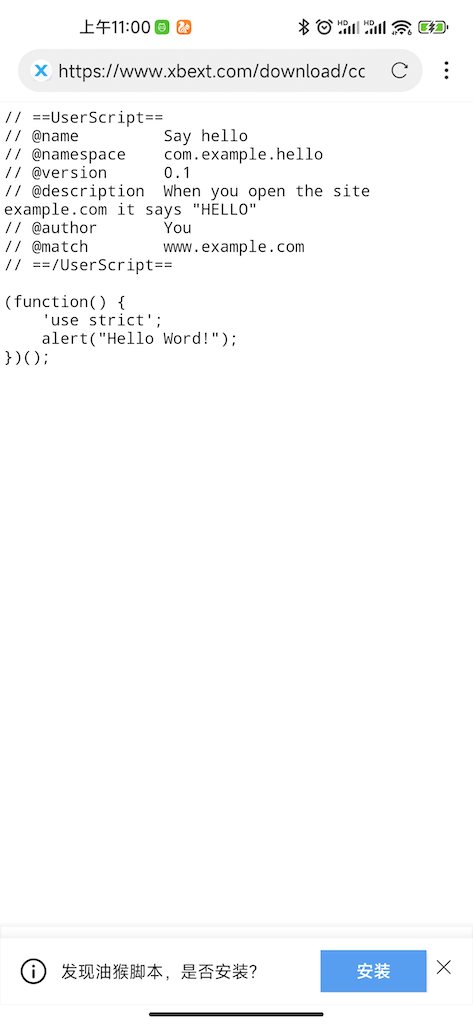
Try opening the test script gm-hello.js in X Browser. You will see a prompt asking whether to install the script, as shown below.
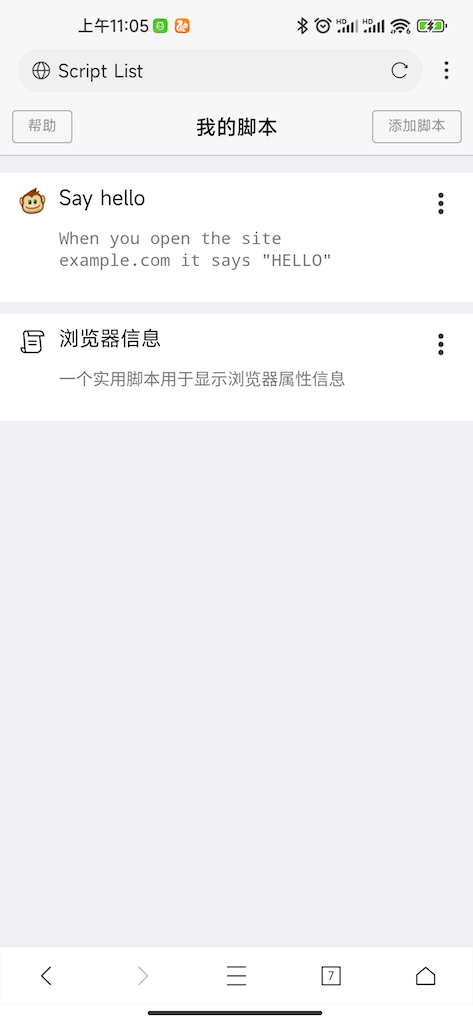
After clicking install, you will see the just-installed script in Settings -> User Scripts.
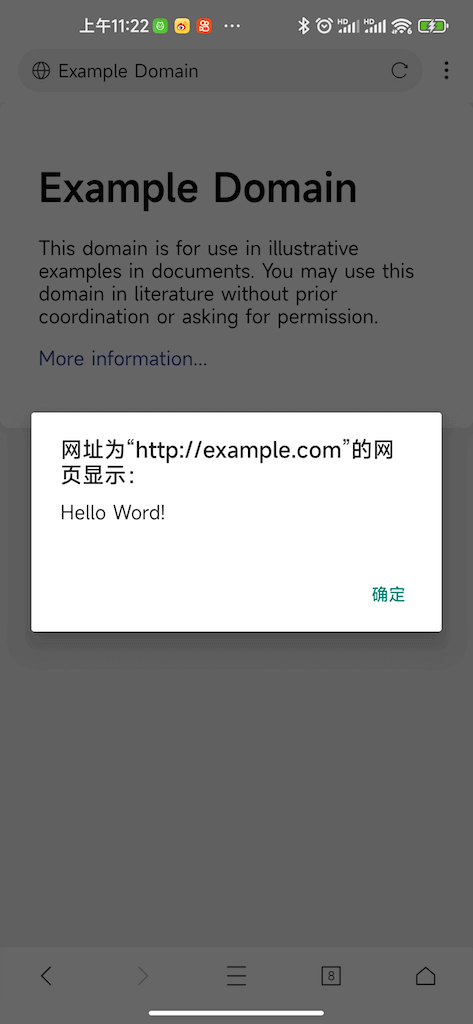
Test the just-installed script: Open the www.example.com site in the browser, and you will see a “Hello World!” dialog box displayed on the web page.
Installing Tampermonkey Scripts from Greasy Fork
Greasy Fork is a very popular script sharing site with a large number of developers sharing scripts here, and the script update frequency is also very high. Below we introduce how to install Tampermonkey scripts on Greasy Fork.
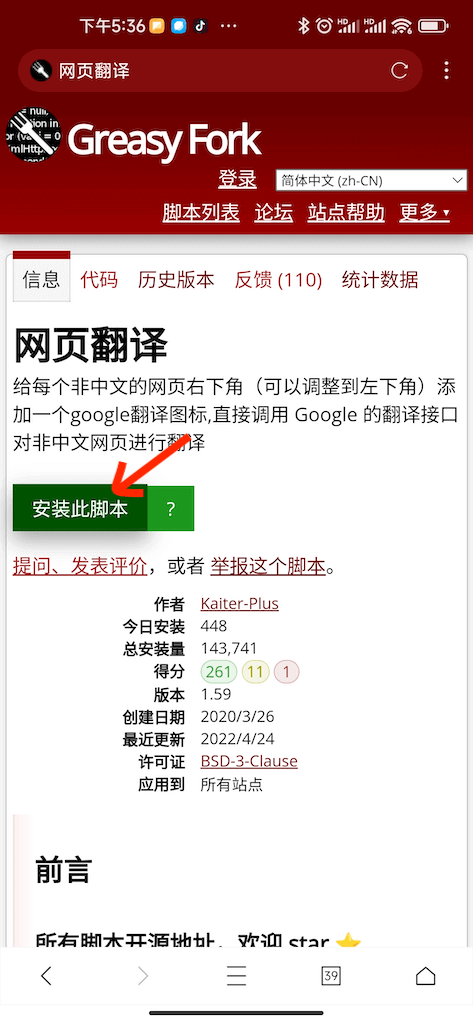
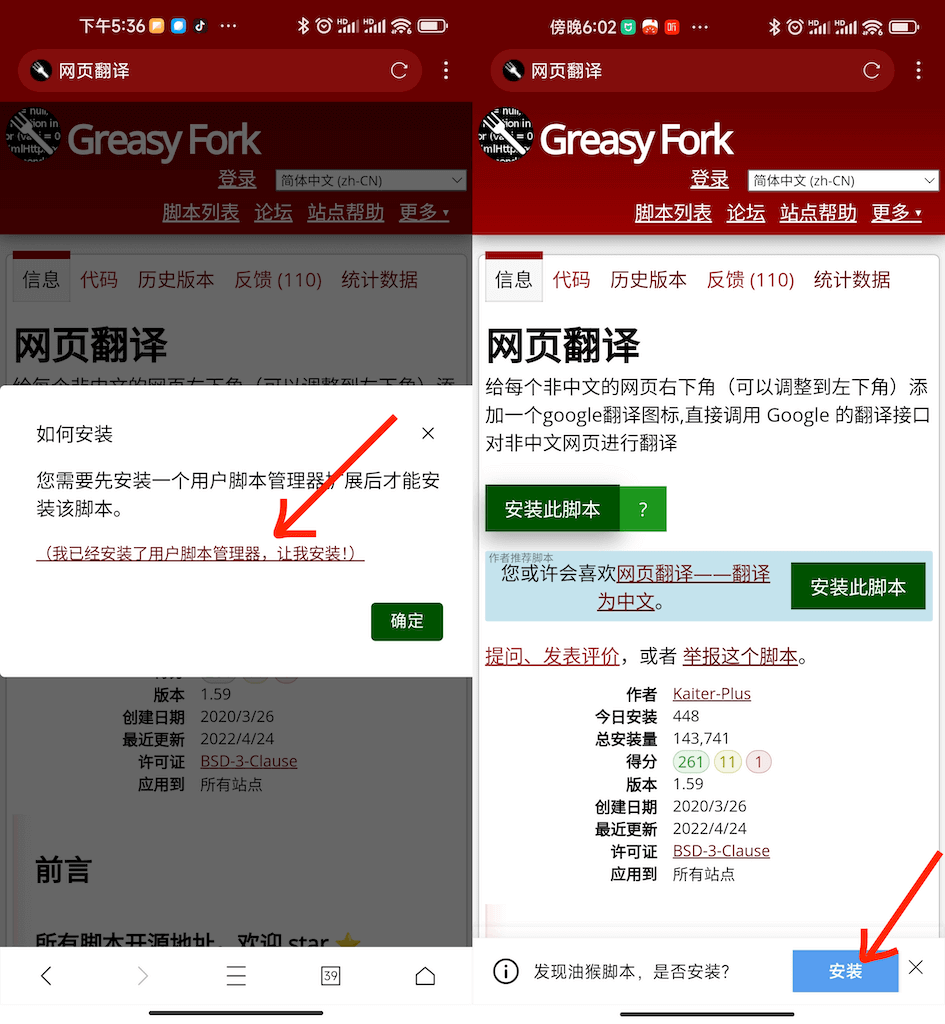
Taking the Web Translation script as an example, open the script details page and directly click the “Install this script” button.
When installing a script for the first time, the site will pop up a dialog box. Since X Browser already has a built-in script manager and does not need to install third-party extensions, directly click “I have already installed a user script manager, let me install”, and then click install again to pop up the browser’s script installation prompt.
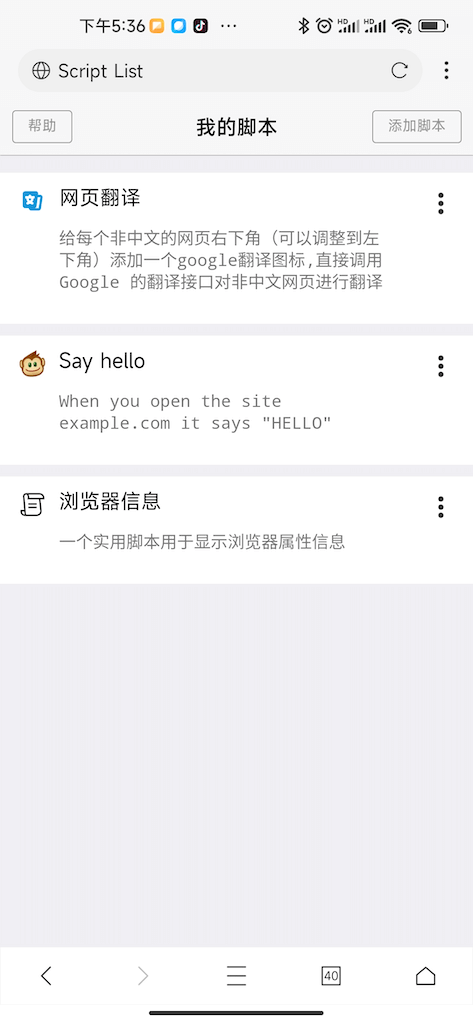
After the script is successfully installed, we can see the just-installed script in the user script management interface (Browser Settings > User Scripts).
Tip: Many scripts on Greasy Fork are mainly for PC browsers. Before installing a script, please check the script author’s introduction to see if it is compatible with mobile browsers.
Other Channels for Getting Scripts
Here are several popular script sharing sites where you can find the scripts you need.
Common Issues (Troubleshooting)
- Script not working after installation: Please first confirm whether the script is enabled, and check whether the matching rules in the script metadata (such as
@match/@include/@exclude) cover the current web page. - Greasy Fork install button not responding: Some sites will first prompt “I have already installed a user script manager”. Please follow the prompts and click install again.
- Some scripts have poor experience on mobile: Many scripts are mainly for PC browsers. Please prioritize reading the script author’s instructions to confirm whether it is compatible with mobile.